They Weren’t the Toughest. They Were the Most Precisely Engineered.
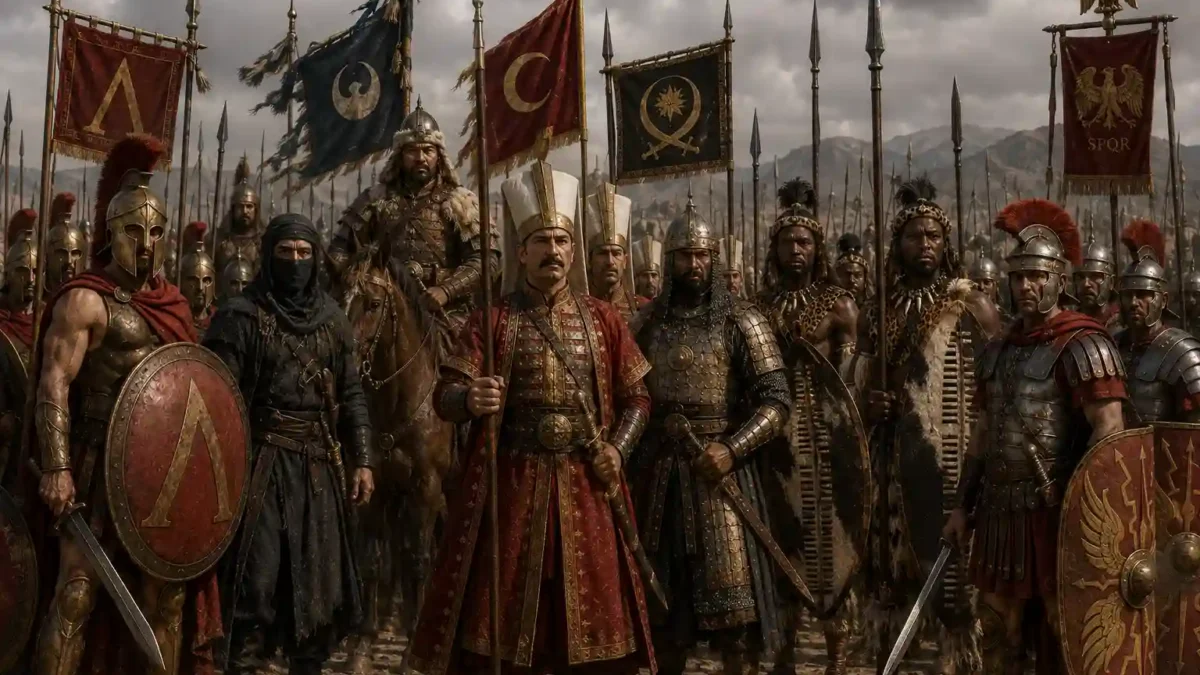
The movies have trained us to think about ancient warriors as archetypes: the stoic Spartan, the ferocious Viking, the unstoppable Mongol horde. These images aren’t entirely wrong, but they miss what’s actually interesting. The most formidable warrior cultures in history weren’t formidable because they happened to produce especially tough people. They were formidable because someone, a king, a general, a theological sect looked at a specific problem they couldn’t solve with conventional force and reverse-engineered a human weapon to solve it.
Every genuine military innovation in history is an answer to a concrete question. The Hashshashin weren’t elite fighters in any conventional sense. The Varangian Guard were, technically, mercenaries. The Dahomey Agojie were women in a world that assumed women didn’t fight. What made each of them extraordinary wasn’t some vague cultural toughness, it was the precision with which they were designed to solve a problem that ordinary soldiers couldn’t.
Look at the failure modes and this becomes undeniable. These warrior cultures didn’t fade gracefully into obsolescence. They broke down in the exact places their original design left them vulnerable because anything engineered tightly enough to solve one problem will break in predictable ways when conditions change. The Spartans’ system slowly strangled the population it depended on. The Janissaries became the political faction they were invented to prevent. The Mamluks overthrew the dynasty they were purchased to protect.
What follows isn’t a ranking. Rankings miss the point. The Zulu and the Mongols can’t be compared on a single axis any more than a scalpel and a siege engine can. What they can be compared on is this: what problem were they solving, how elegantly did they solve it, and what did their failure reveal about the design?
The Spartans: When Internal Security Masquerades as Military Glory
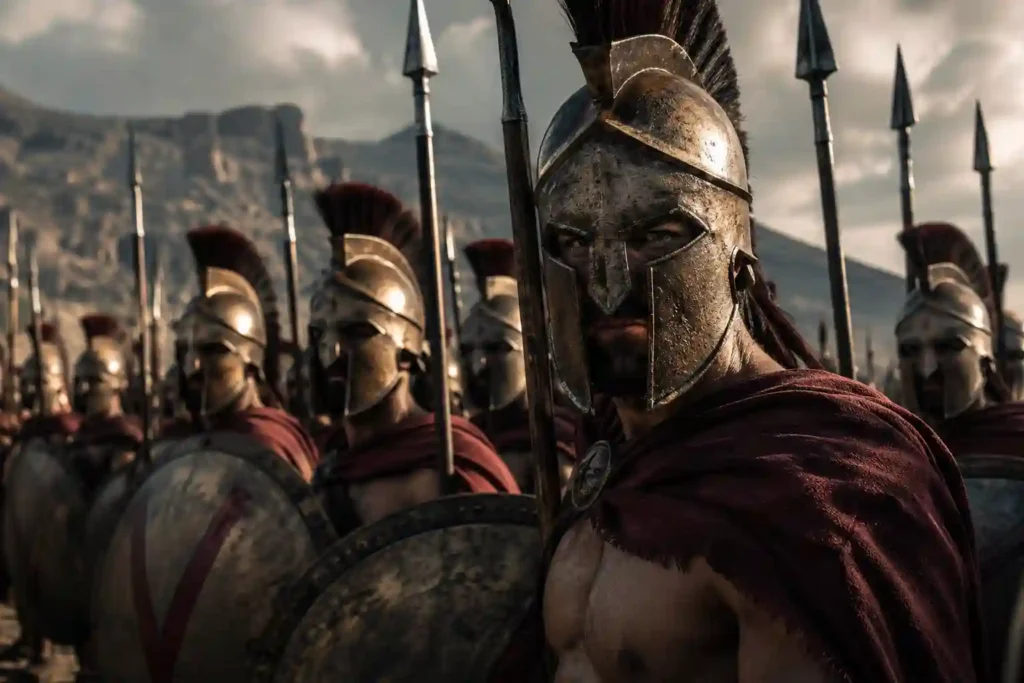
The standard Spartan story begins with the agoge, the brutal training program starting at age seven, the barefoot marching, the institutionalized hunger, the organized beatings. This is all documented. What’s almost never explained is why any of it existed.
Sparta wasn’t a city surrounded by powerful enemies. It was a city surrounded by people it had enslaved. The helot population, the conquered peoples of Laconia and Messenia forced into agricultural servitude, outnumbered Spartan citizens by ratios that ancient sources place anywhere from 7:1 to 10:1. With perhaps 8,000 to 10,000 Spartan citizens controlling somewhere between 70,000 and 100,000 helots, the arithmetic of a revolt was terrifying. Every Spartan had to be a soldier not primarily because of Persia, but because internal security depended on maintaining a credible capacity for overwhelming violence at all times.
The agoge’s true product wasn’t battlefield excellence in the abstract. It was a warrior class psychologically capable of perpetual vigilance and systematic violence against a captive population. The Krypteia makes this explicit. Each year, Spartan magistrates ritually declared war on the helots, a legal fiction that allowed the Krypteia, an elite corps of young men, to hunt and kill any helot deemed too strong, too capable, or too politically aware to be safe. This wasn’t a fringe atrocity. It was curriculum. Night operations, stealth, the psychological capacity to kill without remorse, all trained through what was effectively a state-sanctioned murder program targeting the people who grew Sparta’s food.
Spartan women were not outside this system, they were one of its enforcement mechanisms. They held property, managed estates during men’s campaigns, and were culturally empowered to publicly shame any son or husband who failed in battle. The phrase attributed to Spartan mothers: “return with your shield or on it” may be apocryphal in every specific instance, but the structural reality it points to is documented: maternal rejection was as motivating as anything the agoge directly administered.
The failure mode was built into the architecture. The same exclusivity that made the agoge’s graduates formidable ensured the pool of graduates would shrink irreversibly. Spartan citizenship required contributing to communal messes — a financial obligation that, as agricultural land concentrated in fewer hands, increasing numbers of citizens couldn’t meet. A man who couldn’t afford his mess contribution lost citizenship. His sons couldn’t enter the agoge. The pool of soldiers shrank. The Spartiate population collapsed from roughly 8,000 citizens in the early fifth century BCE to fewer than 1,000 by the mid-fourth century, figures that vary across ancient sources but point consistently in one direction. The system couldn’t recruit from outside itself: bringing perioikoi or helots into the citizen-soldier class would have required dismantling the entire social logic the agoge was built on. Sparta chose demographic extinction over ideological compromise. By the time the threat was obvious, the correction was impossible.
The Hashshashin: Fear as Force Multiplication
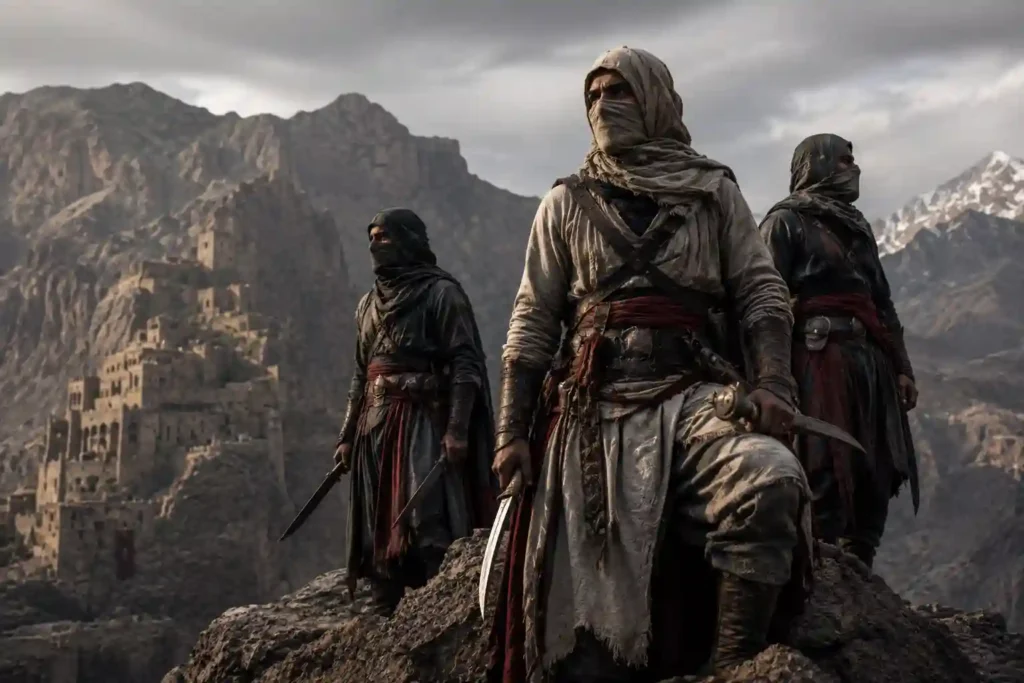
The word “assassin” entered European languages from the Arabic hashshashin, and the image it conjured was of drug-crazed fanatics dispatched by a shadowy master to kill without mercy or hesitation. Nearly every element of this is wrong, and the wrongness itself is the most interesting thing about them.
The sect’s own name for its members was Asāsiyyūn — people faithful to the foundation of the faith. The hashish connection appears to derive from Marco Polo and other outside observers who misread or misheard the word, and from deliberate disinformation spread by their enemies. The “hashish-crazed killer” narrative was enemy propaganda that worked so well it survived eight centuries into the present. The Hashshashin were not stoned. They were careful, patient, and operating inside a sophisticated theory of political violence that had almost nothing to do with the violence itself.
Their problem was existential: a small Ismaili Shia sect, headquartered in mountain fortresses in northern Persia, surrounded by hostile Sunni caliphates and Crusader states vastly more powerful than anything the sect could field in conventional combat. You cannot win a war of attrition when you are outnumbered by orders of magnitude. So they didn’t try.
What the Hashshashin understood with a clarity that most military theorists of their era lacked is that political power doesn’t reside in armies. It resides in specific people. Remove the right person, and an entire military campaign collapses. More importantly, make the right people believe they might be removed, and the campaign never begins. The goal wasn’t assassination. The goal was the permanent, credible threat of assassination, a posture that made attacking the Hashshashin cost more than it was worth, regardless of how overwhelming the attacker’s conventional forces were.
The story of Saladin illustrates the mechanics perfectly. The greatest Muslim military commander of his era survived two assassination attempts and then laid siege to the Hashshashin stronghold at Masyaf in Syria. He woke one night to find signs that someone had been in his tent, hot scones in a shape characteristic of the sect, and a note pinned with a poisoned dagger. He lifted the siege and negotiated a truce. The Hashshashin never had to kill him. The demonstration of access, the proof that his most intimate space was not secure, accomplished what no army could have.
Whether the tent story is literally true in all its details is disputed; accounts vary across sources and their precise truth may never be established. What’s documented is the outcome: after the siege of Masyaf, Saladin’s forces coexisted with the Ismaili strongholds in relative peace. He never attacked another one. The message had been received.
Their failure mode was a single enemy who didn’t play by the rules the system assumed. When the Mongols arrived in Persia in the mid-thirteenth century, they presented a problem the Hashshashin had no answer for: an enemy who didn’t care about the reputational cost of losing leaders to assassination. The entire Hashshashin theory of leverage depended on political opponents who valued their own leadership enough to be deterred by credible threats against it. The Mongols valued the destruction of the Hashshashin more than they feared any individual death. In 1256, Hulagu Khan’s forces simply destroyed the mountain fortresses systematically, completely, and killed the sect’s leadership. The system that had paralyzed Saladin had no contingency for an enemy willing to absorb whatever it could deliver and keep coming.
The Mongols: Terror as Logistics
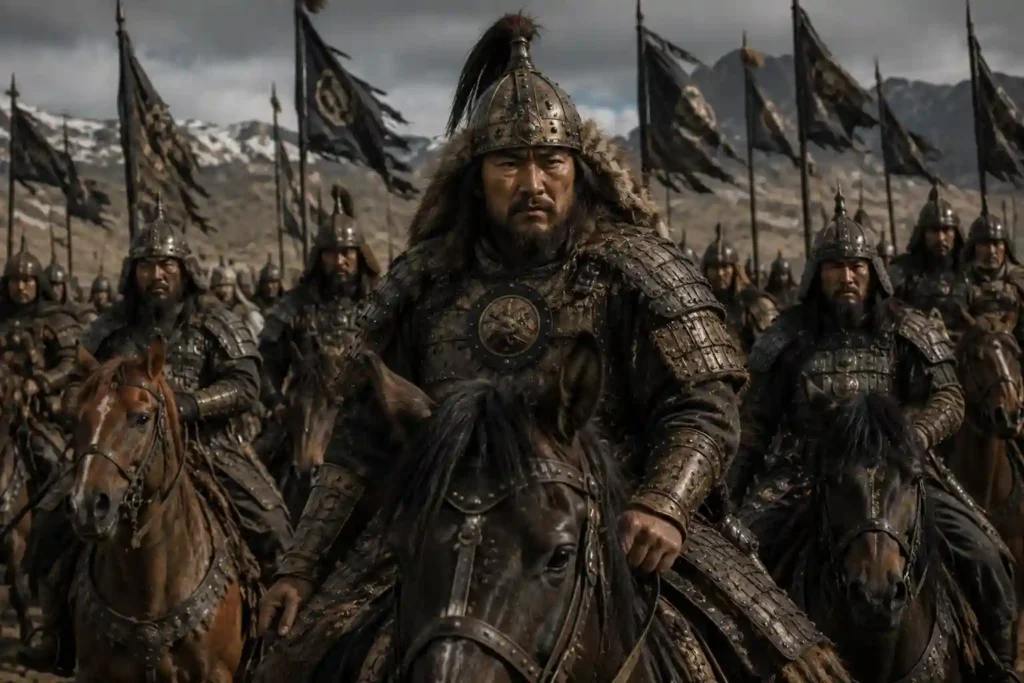
The standard Mongol story emphasizes speed, horse archery, and the feigned retreat, the tactic where Mongol cavalry would break and flee, drawing pursuers out of formation before turning and destroying them. All of this is real. None of it is the most interesting part.
Enjoying this?
Get more deep dives like this one, straight to your inbox.
The most interesting part is that the Mongols’ actual problem wasn’t how to win battles. Nomadic horse archery already gave them decisive tactical advantages over sedentary armies on open ground. Their problem was scale: how do you project power across a continent when you have no cities, no fixed administrative infrastructure, and supply lines that can’t support a conventional occupation? How do you hold territory ten times larger than anything any previous empire had managed, with a population base a fraction the size of the civilizations you’ve conquered?
Their answer was to make conquest so psychologically costly that resistance became irrational before it began. This was not accidental brutality. It was engineered communications strategy.
Before any invasion, Mongol agents — spies, merchants, travelers were inserted into target populations months or years in advance. Their job was to spread specific information: exaggerated accounts of Mongol numbers, amplified descriptions of what happened to cities that resisted, carefully calibrated rumors designed to make defense feel hopeless. Captives were sometimes deliberately released to carry these stories home. The intelligence operation that preceded Batu and Subutai’s invasion of Europe is the clearest example: for nearly a decade before the campaign, Mongol agents mapped roads, assessed fortifications, identified political fractures between kingdoms, and established the information environment the actual army would move through. The military crossing was the last step of the operation, not the first.
The strategic logic was economic. Every city that surrendered without a fight saved the Mongols the enormous cost of a siege, in time, in casualties, in equipment, in the logistical burden of feeding an army through a prolonged operation. Every city that was destroyed and left as a visible ruin became an advertisement. The Mongols carefully managed the ratio: cities that surrendered were treated with relative administrative pragmatism; cities that resisted were obliterated completely and the fact of their obliteration was publicized. This wasn’t rage. It was pricing. The message was that the cost of resistance was annihilation and the cost of surrender was survival, and once enough cities had made that calculation, the army barely needed to fight.
A Mongol force could traverse extraordinary distances in days, emerging where least expected, then vanishing before defenders could coordinate a response and that speed was only possible because the terrain had been mapped years in advance, and the psychological groundwork had already been laid. By the time the army appeared at the gates, many cities had already lost the battle in their minds.
Their failure mode was the problem that came after winning. Steppe cavalry tactics were devastatingly effective on open ground and psychologically effective against politically coherent states with leaders who could be pressured. They were far less effective against geography that neutralized mobility — dense forests, river deltas, island chains, fortified cities in terrain that offered no room for encirclement. The Mongols adapted aggressively, incorporating Chinese engineers for siege warfare and Persian administrators for governance, but every adaptation carried a cost: the further from the steppe the empire extended, the more it depended on the very sedentary administrative systems it had originally destroyed. The empire fragmented into successor khanates within two generations of Genghis Khan’s death, each adapting to its local environment in ways that made it less recognizably Mongol, which is to say, the most successful nomadic empire in history dissolved partly by becoming the thing it had conquered.
The Varangian Guard: Engineering Loyalty Through Foreignness
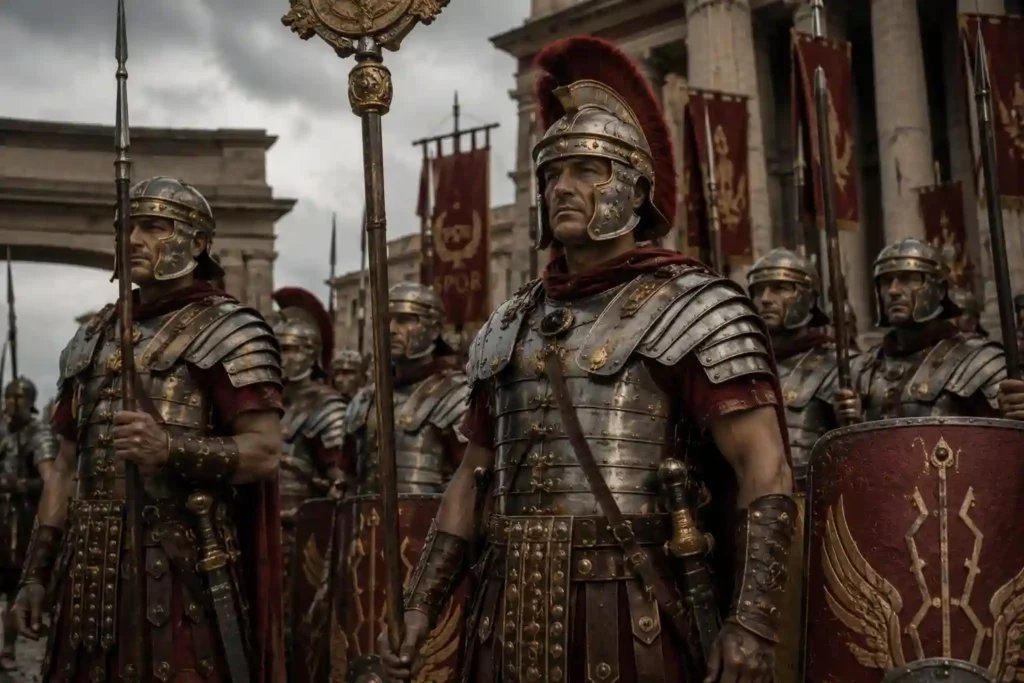
Between 602 and 1453 CE, over half of all Byzantine emperors were murdered, blinded, deposed, or forced into monastic exile. The political environment of Constantinople made the Roman Praetorian Guard look stable. Emperors faced constant threat from within their own court from generals with political ambitions, aristocratic factions with rival candidates, palace officials playing multiple patrons simultaneously. The men most likely to betray a ruler were precisely those closest to him.
The solution was radically counterintuitive: hire men who had no idea how Byzantine politics worked and no stake in its outcomes. When Emperor Basil II faced a massive internal rebellion and turned to Vladimir the Great of Kievan Rus’ for military assistance in 988 CE, the 6,000 Viking warriors who arrived were not just useful fighters. They were, from a loyalty-engineering perspective, structurally perfect. They had no family alliances in Constantinople. They had no dynastic ambitions in the Byzantine succession. They had no merchant partners in the city’s commercial factions. They couldn’t be recruited into a conspiracy they didn’t have the political vocabulary to understand. Their foreignness, which might have seemed like a liability, was the entire point.
The compensation structure reinforced this. Varangian guardsmen earned substantially more than standard Byzantine soldiers. Ambitious recruits actually paid an entry fee in gold for the privilege of joining, which meant the Guard self-selected for men with enough resources and reputation to afford the buy-in, and enough ambition to consider it worthwhile. When an emperor died, the Guard held a traditional right to enter the imperial treasury and take as much gold as each man could physically carry. This sounds like a loyalty problem waiting to happen. It was actually the opposite. The incentive pointed entirely toward keeping the emperor alive and his reign long and prosperous, because a guardsman who served through a stable reign collected decades of elevated salary before the windfall. Assassination served no one’s financial interests, which is precisely why the arrangement worked.
The reputational economy back in Scandinavia completed the architecture. Men who completed service returned home to Iceland and Norway unimaginably wealthy, dressed in Byzantine silk and gold-embroidered robes. Rune stones were raised across Scandinavia to commemorate warriors who had gone to Miklagard, the Viking name for Constantinople. The Guard became a dream posting, which meant it could be selective, which meant its reputation for quality remained high, which meant Byzantine emperors kept trusting it, which meant the posting remained lucrative. The loop was self-reinforcing. A Varangian guardsman’s entire professional reputation at home depended on honorable foreign service, betraying an emperor wouldn’t just end a career in Constantinople, it would follow a man back to Scandinavia as a permanent stain. Harald Hardrada, who would later become King of Norway and whose defeat at Stamford Bridge in 1066 is sometimes called the true end of the Viking Age, served in the Guard for roughly a decade before returning home wealthy enough to fund a royal claim. His trajectory, young warrior with limited prospects, Varangian service, return home transformed, was the template dozens followed.
The loyalty that Byzantine emperors valued so highly wasn’t Viking cultural virtue. It was the product of a carefully constructed system in which betrayal was economically irrational, reputationally catastrophic, and structurally unnecessary. The Guard’s foreignness wasn’t a compromise. It was the mechanism.
The Zulu Impis: Geometry as Military Doctrine
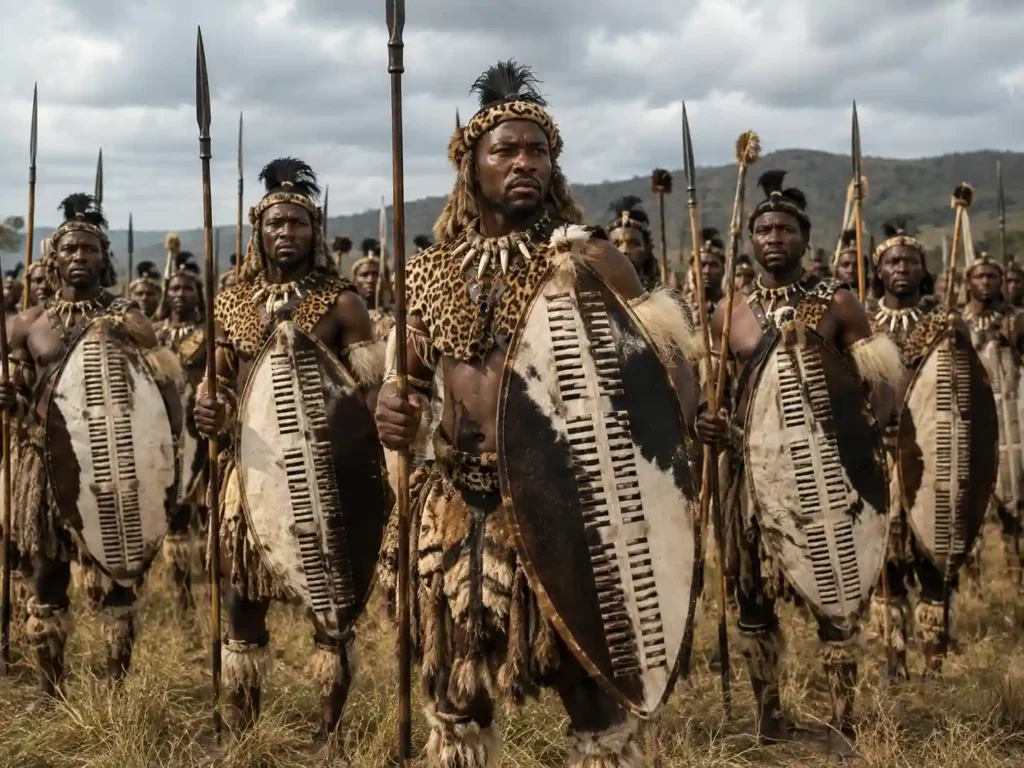
The standard framing of Isandlwana, the battle in January 1879 where a Zulu force destroyed a British column equipped with Martini-Henry rifles, is one of courage overcoming firepower, of raw numbers absorbing modern weapons through sheer will. This framing is wrong in ways that are more interesting than the myth.
The Zulu impis didn’t win at Isandlwana by absorbing British fire. They won because the British commander made a sequence of decisions that the bull-horn formation was geometrically designed to punish. Forces were deployed up to a mile in front of the main encampment and its ammunition supplies. The line was spread thin. No prepared defenses had been constructed. The Zulus used ravines to approach faster than anticipated, and the horns of the formation, the flanking arms sent wide around the British line enveloped the position from both sides simultaneously, attacking the flanks and rear where the linear firing line had no effective coverage. The chest fixed the British frontally and absorbed their attention and ammunition; the horns destroyed them. The tactic didn’t overcome firepower. It geometrically neutralized it by attacking from directions where it couldn’t be brought to bear.
The ammunition-shortage explanation that dominated British accounts for decades, the claim that resupply failed at the critical moment is now largely considered a post-hoc rationalization. The ammunition story was a more comfortable explanation than the accurate one: that a British commander’s tactical arrogance had placed his force in a position where its firepower advantage was irrelevant.
What made the impis capable of executing this with such precision was a motivational system as carefully engineered as any in this list. Shaka restructured Zulu society around age-based regiments called *amabutho*. Young men enrolled in a regiment were forbidden from marrying until the king granted collective permission as a reward for distinguished battlefield service. This prohibition could last years, sometimes a decade or more. The psychological architecture was deliberate and total: everything that defined adulthood in Zulu culture — wives, cattle, homesteads, social standing was withheld until the regiment proved itself in the king’s eyes. An entire cohort of young men had their adult identity held in escrow, redeemable only through battlefield distinction.
The regiment system also dissolved the clan-based loyalties that had previously fragmented Nguni military power. A soldier’s primary identity was his regiment and his king, not his lineage or clan chief. There was no sub-commander who could defect, negotiate a separate peace, or hedge his loyalty toward a rival. The amabutho created a force with unified command loyalty that most contemporary European armies, relying on aristocratic officers with independent political interests, couldn’t match.
The failure mode arrived with industrialized firepower at scale. Isandlwana demonstrated what the bull-horn formation could do against a tactically incompetent opponent. Later engagements in the same war demonstrated its limits against prepared positions with interlocking fields of fire. At Rorke’s Drift, a tiny British garrison behind improvised barricades held off a far larger Zulu force through the night, the same geometric envelopment that had destroyed a column in open ground couldn’t crack a fortified perimeter. The impis were engineered for decisive open-field engagement. Against European colonial armies that learned, however belatedly, to prepare their ground, the formation’s genius became its constraint.
The Mamluks and Janissaries: The Same Solution, The Same Collapse
These two warrior systems are separated by geography and religion but share an identical design logic and an almost identical failure mode, which makes them worth examining together, because the parallel is too precise to be coincidence. It’s a pattern.
Both the Mamluk system of the Islamic caliphates and the Ottoman Janissary corps were built on the same insight: the most dangerous person to a ruler is someone close enough to betray him who also has something to gain from doing so. The solution in both cases was to create warriors who had been surgically removed from every prior social bond — family, clan, ethnicity, language, religion and rebuilt from scratch with a single loyalty.
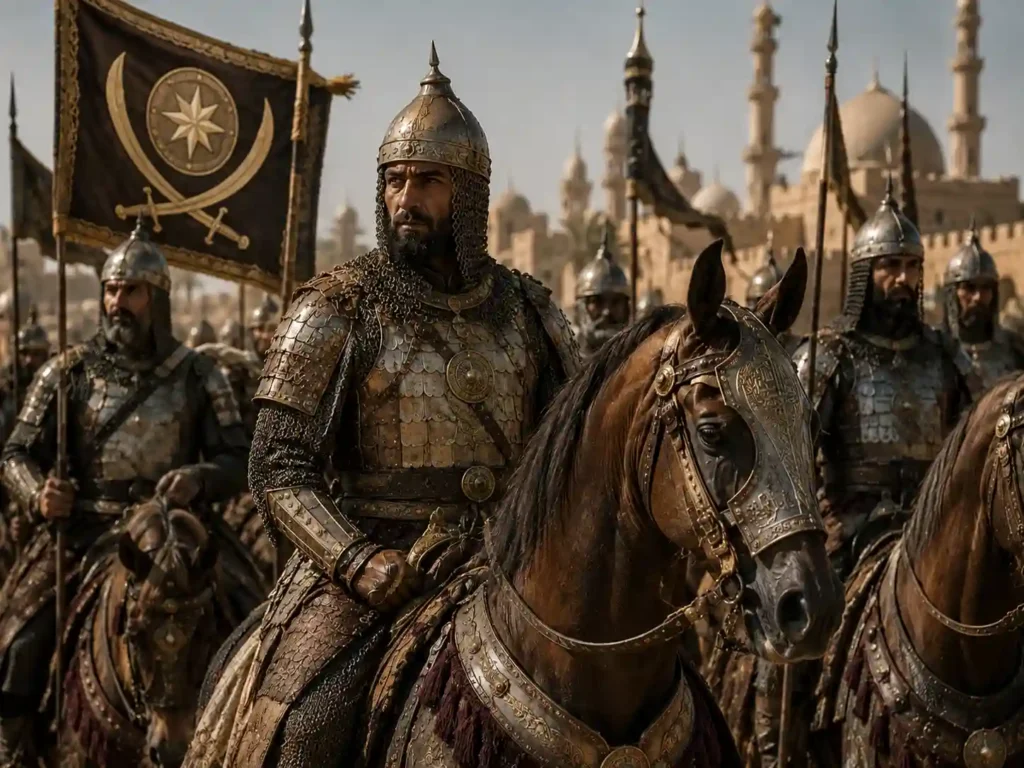
The Mamluks were purchased as boys, primarily from Turkic, Kipchak, and Caucasian populations, converted to Islam, and raised within closed military households where the institution itself replaced every other relationship. A Mamluk owed his name, his rank, his income, and his identity entirely to the system that made him. He had no tribe to defect back to, no ancestral claim to the territory he served in, no family whose safety could be used as leverage against him.
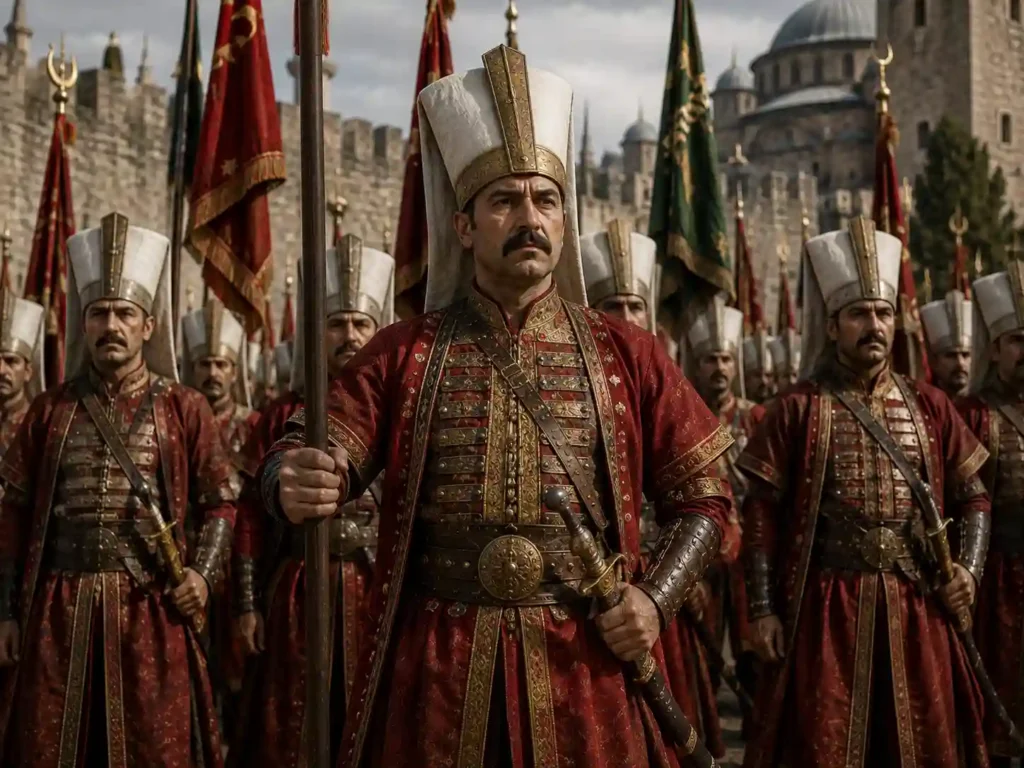
The Janissaries were constructed through the Ottoman devshirme, the periodic conscription of Christian boys from Balkan subject populations, converted to Islam, educated in Ottoman culture, and trained as elite infantry. The design logic was identical: sever prior loyalties, replace them with institutional ones, produce a warrior class answerable only to the sultan.
For generations, both systems worked exactly as intended. The Mamluks became the most effective heavy cavalry in the medieval Middle East, the force that stopped the Mongols at Ain Jalut in 1260, the one of the most significant Mongol defeats in open battle during that era, a result that genuinely altered the trajectory of Islamic civilization. The Janissaries were, for two centuries, the most advanced infantry in Europe — disciplined, professionally trained, and lethal.
Then both systems collapsed in the same way, from the same cause, on slightly different timescales.
The Mamluk failure was built into the ownership structure. Each Mamluk amir purchased and trained his own Mamluks, who owed primary loyalty to him personally, not to the sultan, not to the state. When an amir died or fell from power, his Mamluks became dangerous free agents: trained killers with strong group cohesion, no external loyalties, and nothing to lose. The corporate solidarity that made them formidable as soldiers made them ungovernable as a political class. In 1250, the Mamluks overthrew the Ayyubid dynasty they had been purchased to serve and established their own sultanate. The system designed to prevent political ambition had produced the most politically ambitious warrior class in the medieval Middle East. The Mamluk Sultanate then perpetuated the identical system to staff its own military and faced the same internal tensions as a result. It is one of history’s clearest examples of a solution that recursively became the problem it was designed to solve.
The Janissary collapse followed a different timeline but an identical logic. The corps was stationed permanently in Constantinople rather than dispersed across the empire, and proximity to the capital proved fatal to the original design. Over time, Janissaries married. They had children. They established businesses and formed alliances with Constantinople’s merchant class. The corps became hereditary in practice, with fathers enrolling sons, a direct inversion of the devshirme principle that had created them. By the seventeenth century, they were no longer an elite force answerable only to the sultan. They were a politically entrenched Istanbul interest group capable of deposing sultans they disliked, and they did so, repeatedly.
Their military obsolescence arrived separately but compounded the problem. As European armies developed standardized drill, professional officer training, and firearms tactics through the seventeenth and eighteenth centuries, the Janissaries, who had politically blocked military modernization because reform threatened their privileged status, fell further behind. The corps that had once been the cutting edge of European infantry had become the primary obstacle to Ottoman military survival. Sultan Mahmud II dissolved them by force in 1826, in an event the Ottoman government named the Vaka-i Hayriye — the Auspicious Incident, killing thousands in a purge the state celebrated as liberation. The warriors who had made the empire went out as a political faction suppressed by it.
The Dahomey Agojie: Weaponizing Assumptions
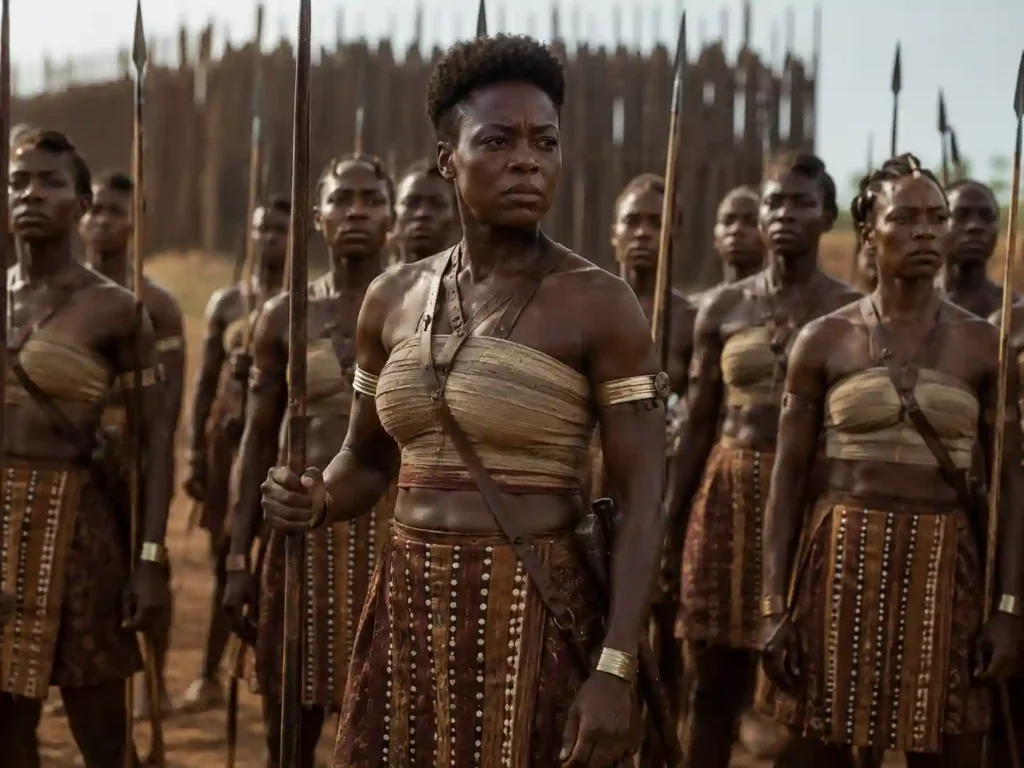
The Kingdom of Dahomey in West Africa faced a problem that most warrior cultures in this list didn’t: a demographic crisis caused by its own success. Wars of expansion and slave raiding depleted the male population faster than it could recover. The conventional military solution to recruit more men was becoming structurally unavailable.
The Agojie emerged partly from this pressure. What began as a royal bodyguard developed, by the nineteenth century, into a frontline fighting force numbering in the thousands, by most accounts the most disciplined and ferocious component of the Dahomey army. Training was deliberately brutal: recruits climbed thorn-covered acacia walls, endured long marches on minimal food, and slept only a few hours a night. Those who failed were dismissed rather than reassigned. Officers were required to demonstrate psychological indifference to suffering, including the suffering of prisoners as proof of command fitness. The system selected not just for physical capability but for a specific psychological profile: absolute commitment, zero hesitation, complete suppression of the instinct toward mercy that training in most cultures worked around rather than through.
The tactical genius was in what the Agojie represented to opponents who had never encountered them. Male warriors from neighboring kingdoms operated within cultural frameworks that treated harming women as taboo, not as weakness, but as a foundational social norm. Facing a charging formation of disciplined, heavily armed female soldiers produced a split-second cognitive conflict: the trained fighter’s instinct against the cultural prohibition. That hesitation was the weapon. The Agojie had been engineered to exploit an assumption so deep in their opponents’ worldview that those opponents didn’t even know they held it until the moment it killed them.
Liked where this went?
Subscribe and never miss the next rabbit hole.
French officers who fought against the Agojie in the colonial wars of the early 1890s documented consistently that they were the most dangerous fighters in the Dahomey army — tenacious, fearless, and requiring concentrated effort to stop. But French repeating rifles and a complete absence of cultural taboo about killing women rendered the shock-value advantage irrelevant. An enemy without hesitation, armed with weapons that made close-quarters engagement unnecessary, was precisely the opponent the Agojie’s design had no answer for. They were effectively destroyed within two years of French intervention, not because the system had failed on its own terms, but because the terms had changed in ways the system couldn’t adapt to.
What the Pattern Reveals
Line these cultures up and the same shape appears, over and over. A specific problem. An engineered solution precisely calibrated to that problem. Decades or centuries of devastating effectiveness. Then a failure mode that traces directly back to the original design.
The Spartans built a system so exclusive it consumed the population it depended on. The Hashshashin built a deterrence model that worked on every enemy except one who didn’t value its own leadership. The Mongols built a terror economy that couldn’t survive the transition from conquest to administration. The Varangian Guard built loyalty through foreignness and when the flow of ambitious Scandinavians willing to make the journey eventually slowed, the pool of structurally perfect recruits shrank with it. The Mamluks and Janissaries both built warrior classes by severing prior loyalties, and both watched those classes develop new loyalties that proved equally dangerous. The Zulu impis built a formation of devastating geometric elegance that required open ground and a tactically unprepared enemy to reach its full potential. The Agojie built a shock force that weaponized their opponents’ assumptions, until they met an opponent without those assumptions and with the firepower to make the question irrelevant.
None of these failure modes were accidents or bad luck. They were consequences. Every design choice that made these forces exceptional also constrained them in specific ways, and the constraint eventually caught up with the capability. This is what separates genuine military innovation from mere toughness: innovation solves a problem, but it also inherits the shape of that problem. The solution is only as durable as the conditions it was built for.
The Hollywood version of ancient warriors is essentially a story about human qualities — courage, discipline, ferocity that transcend context. The actual history is almost the opposite. These were human systems, engineered with varying degrees of deliberateness to perform specific functions in specific environments. What’s remarkable isn’t that they were tough. Lots of people throughout history have been tough. What’s remarkable is how precisely each of these cultures identified a gap between what conventional force could accomplish and what their situation demanded, and then built something to close that gap.
The Hashshashin never needed a large army. They needed one credible demonstration that no one was unreachable. The Varangian Guard never needed cultural loyalty. They needed structural conditions that made betrayal economically irrational. The Agojie never needed to be the strongest fighters on the battlefield. They needed opponents who would hesitate long enough for strength not to matter.
Understanding what each of these systems was actually for, what problem it was reverse-engineered to solve doesn’t diminish the people inside them. The Zulu warrior who trained under the amabutho system, who had his entire adult future held in escrow against his regiment’s battlefield performance, was not less impressive for operating within an engineered motivation structure. If anything, understanding the architecture makes the human reality inside it more vivid, not less. These were real people navigating systems of extraordinary pressure and violence, often with no more choice in the matter than a Mamluk boy purchased from his family at age ten.
But the systems themselves reward a different kind of attention than the one popular history usually gives them. Less admiration for toughness. More curiosity about design. The question worth asking of any warrior culture isn’t who would win in a fight — it’s what problem were they built to solve, and what does their failure tell us about the assumptions baked into the solution.
The answers, it turns out, are rarely what the movies suggest, and almost always more interesting.

Leave a Reply