What Really Happens When Humans Survive the Impossible
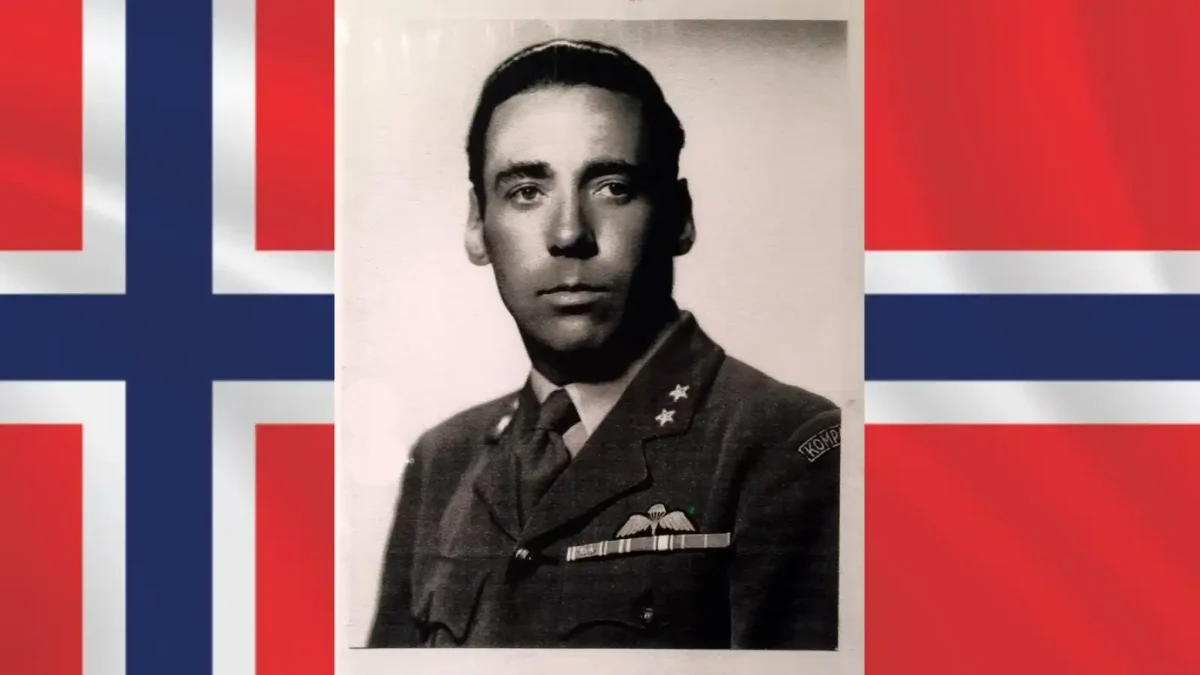
Somewhere on a Norwegian mountain plateau, in the winter of 1943, a man is removing his own toes.
He is not performing surgery. He has no anesthetic, no sterile field, no training in medicine. What he has is a knife, and gangrenous tissue that has already begun to separate from living flesh on its own. The necrosis has done most of the biological work. What he is doing, in some sense, is simply cooperating with his body’s own decision. Completing a process already underway. Negotiating with his own disintegration while still, technically, alive.
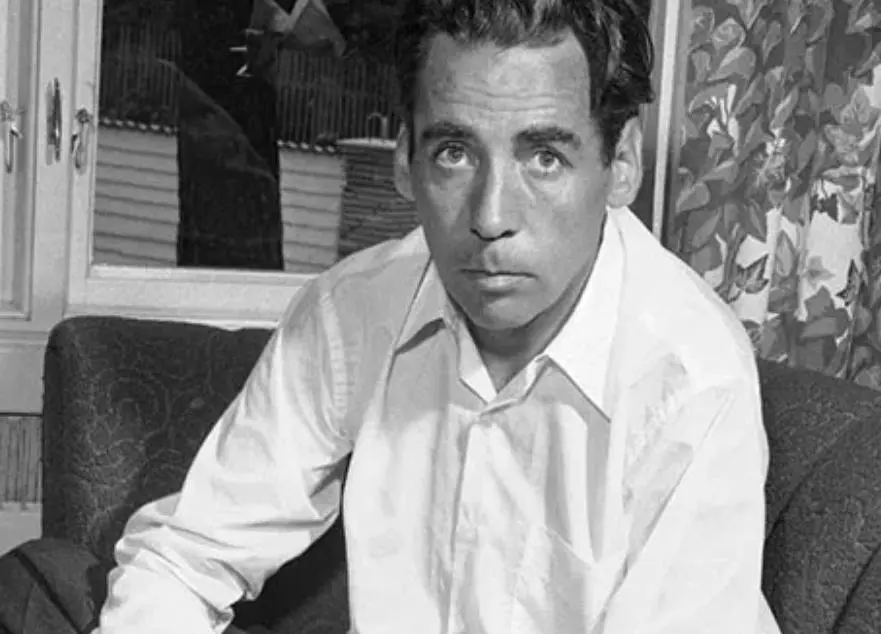
His name is Jan Baalsrud. He has been alone on this plateau — snowblind, delirious with infection, unable to walk for somewhere around 27 days. The water temperature when he swam ashore after his sabotage mission was betrayed was approximately 2–4°C. He was barefoot. He had killed the officer leading the pursuit before he jumped in. He had been buried by avalanches. He had watched his eleven companions die or be captured in the hours after landing. And now he is here, in a snow cave near the top of the Manndalen valley, in conditions Norwegian tourism boards would later describe as a place where it is “almost impossible to imagine how a man with frostbite could have survived here for three weeks.”
What I want to talk about is not how impressive this is. It is obviously impressive, in the way that a lightning bolt is impressive — a force briefly made visible that exceeds what our categories of understanding were built to handle. What I want to talk about is what it actually means. What was happening inside that mind while the body kept finding reasons, however faint and mechanical, to continue.
Because somewhere around day 15 on that plateau, this is speculation, but informed speculation, Baalsrud had already decided to die. He reportedly contemplated suicide during his time there; this detail appears in a small number of sources and is then immediately dropped, every time, as if it were a minor footnote rather than the central psychological fact of the story. A man who has decided to die, and who keeps performing the small mechanical acts of survival anyway. Pulling the sleeping bag tighter. Eating the last scrap of something. Cooperating with the gangrene. Not because he chose to survive. Because the organism, apparently, had other ideas.
This is the territory no existing account of Baalsrud goes near. And it happens to be where the genuinely strange material lives.
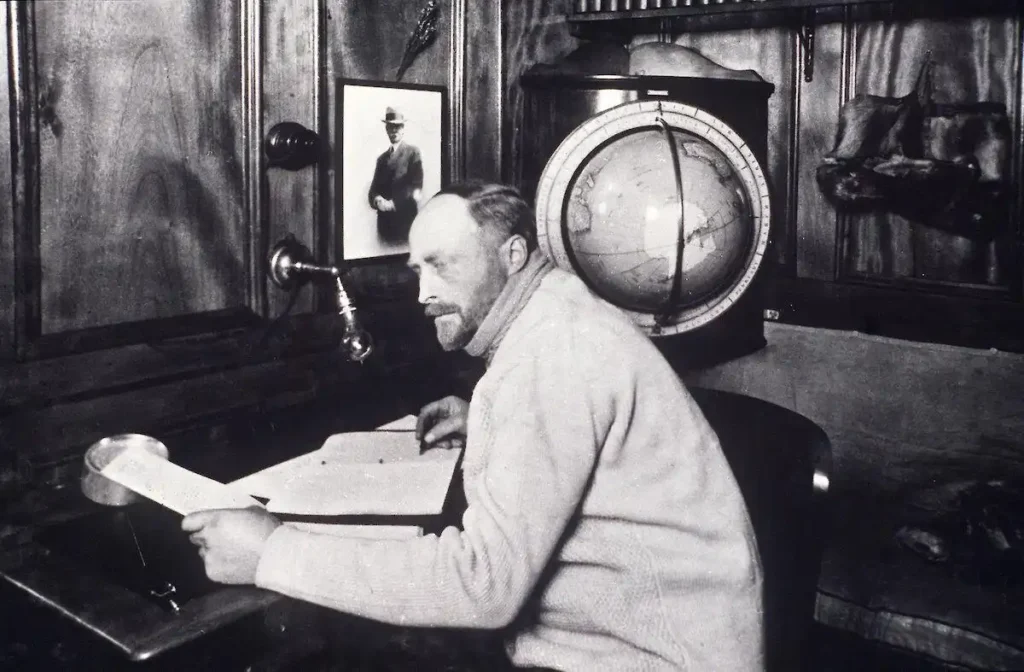
In 1912, Douglas Mawson was returning alone across approximately 100 miles of Antarctic ice after one companion had fallen into a crevasse, taking most of the food with him, and the other had died, almost certainly from hypervitaminosis A after the group ate sled dog liver. Mawson was showing the same symptoms. His hair was falling out. The skin was peeling from his body in sheets. He reportedly strapped the separating soles of his feet back on and kept walking.
What makes Mawson’s case specifically valuable here is that he kept a diary during the return. Not in retrospect. In real time. And his entries document, with remarkable directness, a man watching himself from outside. Describing his own condition as though reporting on a separate person. The self becoming a spectator to the body’s continued performance of survival. This is clinical depersonalization — the mind creating distance from unbearable circumstances by subtly relocating its point of view — and Mawson’s diary entries are among the most direct historical first-person records of it that exist. A man narrating his own dissolution while the body keeps walking.
Enjoying this?
Get more deep dives like this one, straight to your inbox.
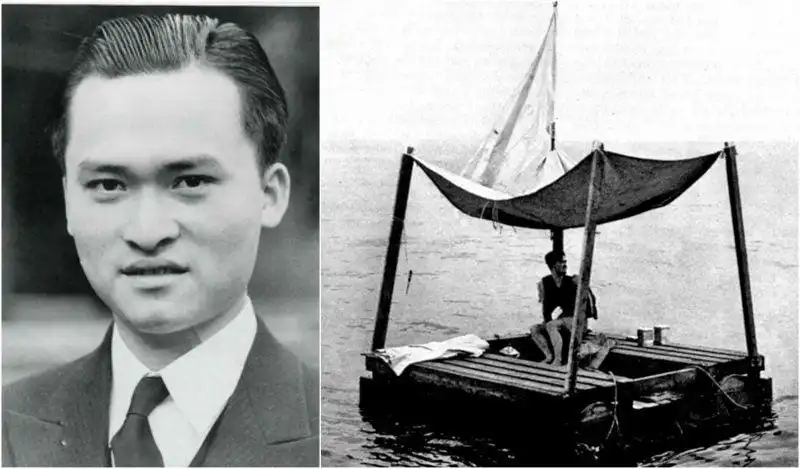
Poon Lim, by contrast, seems to have had almost the opposite experience. He survived 133 days alone on a life raft in the Atlantic after his merchant vessel was torpedoed in 1942 — the longest known solo open-ocean survival on record at the time. His post-rescue debriefs were reportedly methodical and systematic: improvised fishing hooks made from wire, rainwater collection, the eventual killing of a shark. What is psychologically striking in his accounts is the near-total absence of the dissociative texture that runs through Baalsrud and Mawson. Poon Lim does not seem to have stepped outside himself. He seems instead to have compressed himself — to have narrowed the entire available world down to the raft, the sea, and the next necessary task. Not dissolution but reduction. Not the self becoming a spectator but the self becoming smaller, denser, more perfectly fitted to the only environment that existed.
Three men. Three impossible durations. Three different answers to the same question. And the question is not “how did they survive?”, that framing leads only to inspirational platitudes about willpower and grit. The question is: what was the “they” that survived? What remained of the self when the self had been stripped to almost nothing, and was that remainder the cause of survival or merely a witness to it?
The phenomenon John Geiger documented in his 2009 book The Third Man Factor sits at the edge of this question. In conditions of extreme cold, isolation, sensory disruption, and physical deterioration, precisely the conditions Baalsrud endured for nearly a month on the plateau, a significant number of survivors report the presence of a distinct entity. Not a hallucination in the ordinary sense. Something more directive, more stable, more apparently external. A companion. A guide. Something that tells them to keep moving, or simply accompanies them, and which survivors consistently describe as feeling categorically different from imagination.
Whether Baalsrud experienced this specifically is documented only thinly — a small number of sources mention hallucinations and a sense of presence during his time alone, but the evidence for his own direct account of it is uncertain enough that claiming it confidently would be dishonest. What can we say with more confidence is that the conditions he was enduring for those 27 days were essentially the textbook checklist for triggering the phenomenon: extreme cold, prolonged isolation, sensory deprivation from snowblindness, infection-driven delirium, starvation. The neuroscience most commonly proposed involves the brain generating an “other” under conditions of overwhelming threat, possibly related to temporal lobe activity. The result, functionally, is that the organism acquires a companion precisely when it most needs one, manufactured from its own interior. Whether this is the brain’s most desperate trick or its most sophisticated resource probably depends on whether it keeps you alive.
In Baalsrud’s case, something did. Survival training frameworks consider 72 hours in extreme conditions without shelter or food to be a serious threshold. He was at roughly nine times that, actively gangrenous, intermittently blind, and in a location Norwegian sources later called nearly incompatible with survival even for a healthy person. The gap between what the physiology predicts and what happened is not bridgeable by “willpower” as the term is ordinarily used. Willpower implies an agent, a choosing self, an “I” that decides. What Baalsrud’s account — and Mawson’s diary, and Poon Lim’s methodical debrief — all suggest, in their different registers, is that the choosing self was somewhere else, or diminished, or absent, and the organism continued without it.
This is not a comfortable idea. It sits badly with the stories we prefer to tell about survival, which cast it as a moral achievement, a demonstration of character, proof of something. The survivors themselves often resist this framing too, in the other direction — crediting luck, or the people who helped them, or something they can’t quite name. Baalsrud, after reaching Sweden and receiving medical treatment, returned to active service. He did not settle into the identity of a man who had survived something remarkable. What that refusal meant psychologically is, like almost everything about his inner life during those weeks, largely unexamined.
There is a fourth mode of survival in this story that receives almost no attention, and it may be the hardest of all to think about clearly.
In the valley below where Baalsrud lay in his snow cave, men and women were making calculations. The Manndalen villagers who organized his rescue — people including Marius Grønvoll, named in David Howarth’s We Die Alone as a key organizer of the rescue network but almost entirely absent from English-language coverage — were not enduring a single explosive crisis. They were enduring something slower and, in some ways, more corrosive: weeks of sustained terror under conditions of near-certainty that discovery meant execution. Not just their own, but their families’. The Germans had demonstrated willingness to shoot Norwegian civilians in reprisal for resistance activity. Everyone who carried Baalsrud on a stretcher across an exposed ridgeline, or hid food, or passed a message, made that calculation — and then made it again the next day, and the day after that.
Trauma research distinguishes between single-event trauma and chronic sustained threat, and the distinction matters here. The acute crisis — the avalanche, the swim across the fjord, the moment of amputation — has a shape, a beginning and an end, a point at which the worst is over. The chronic version has no such mercy. It simply continues, day after day, the threat neither resolving nor retreating, the children still in the house, the German patrols still within range. What the villagers were managing was not a spike of terror but a sustained baseline of it, and that is documented in clinical literature as producing its own distinct and in some respects more damaging effects than any single catastrophic event.
Their survival mode has no glamour. It generates no dramatic scenes, no moments of physical extremity that translate easily into narrative. It is just the repeated daily decision to not betray the dying man on the mountain, made again and again under conditions designed to make betrayal the rational choice. That is its own form of psychological endurance, and it is never what these stories are about.
The people who carried Baalsrud across the ridgelines do not appear in the survival psychology literature. They don’t appear in the listicles alongside Shackleton and Aron Ralston. What they represent doesn’t fit the available categories — not physical heroism, not individual willpower, not the lone self pitted against elemental forces. Something quieter and, if you sit with it, more vertiginous: the ordinary human choice to continue doing the right thing after the point where doing the right thing has stopped making any rational sense, sustained not for an afternoon but for weeks, with everything on the line.
What connects Baalsrud in his snow cave, Mawson watching himself cross the ice, Poon Lim compressing his world to a raft, and the Manndalen villagers enduring their chronic arithmetic of risk is not a single quality that can be named and bottled. What connects them is something more specific and more unsettling: the moment where the ordinary self, the deliberating choosing narrating self, steps back or steps aside, and something else continues the work.
Liked where this went?
Subscribe and never miss the next rabbit hole.
For Mawson it was visible enough to write down in real time: a self watching another self walk. For Poon Lim it manifested as a kind of radical narrowing, a compression of identity until only the immediately functional remained. For the villagers it may have been something more like the suspension of self-interest so complete and so sustained that it ceased to feel like a choice and became simply the texture of daily life. And for Baalsrud, alone on the plateau with gangrene and snowblindness and the repeated decision to die that he kept somehow not enacting — for him it remains the least documented and most mysterious. The organism continuing. The self somewhere unclear.
There is a question buried in all of this that we don’t think has a clean answer, but that seems worth sitting with. When the conscious, deliberating self withdraws from the process of survival — when the body keeps performing the mechanical acts of staying alive after the mind has partly vacated the premises — is that a failure of the self, or the deepest possible expression of it? Is the thing that remains when everything else has been stripped away the most essential version of a person, or simply the floor, the bare biological minimum that doesn’t know how to stop?
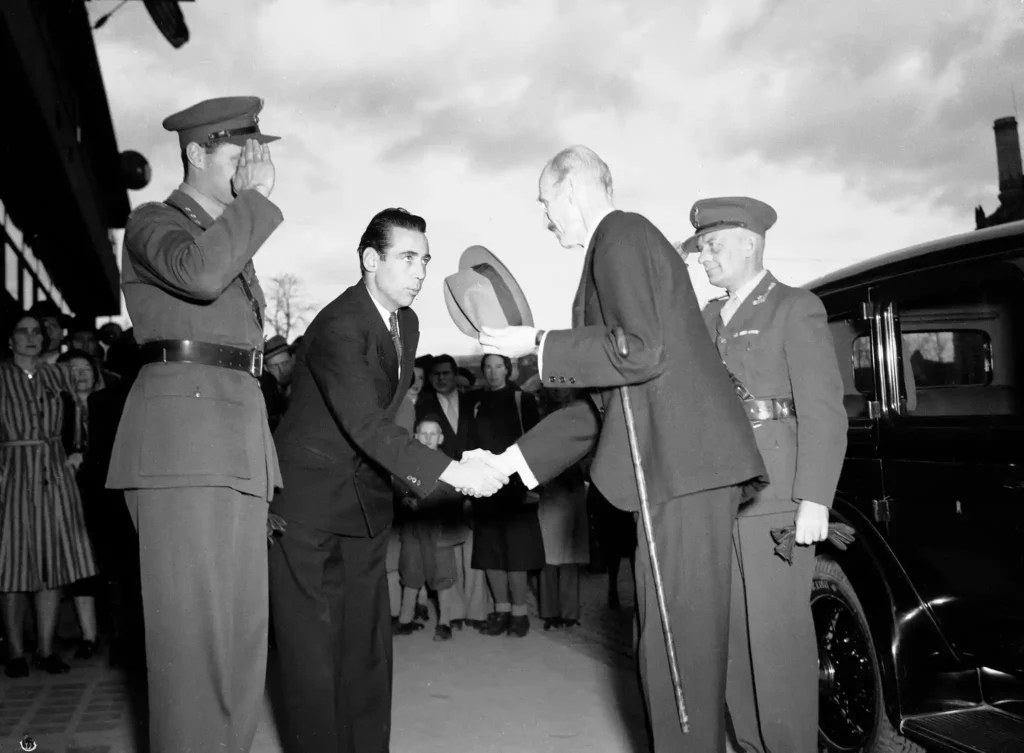
Baalsrud eventually made it to Sweden. The reindeer sled, the Sámi guides, the border crossed. He recovered, imperfectly, and went back to the war. He lived until 1988. Whatever he became after the plateau, after the snow cave, after the toes, was built on top of — or out of — whatever it was that had kept the organism functioning when he himself had arguably stopped trying.
He had been a watchmaker before the war. Someone whose entire professional identity was built around stillness, precision, and the long patient management of tiny mechanisms. Whether that has anything to do with what happened on the mountain, I genuinely don’t know. But I find I can’t stop thinking about it — the man who spent his civilian life learning the intimate logic of small systems that keep time without being asked to, without choosing to, simply because that is what they are built to do.

Leave a Reply